Viltin Galéria
VILTIN’s program presents progressive, media-diverse artistic practices—through solo exhibitions and curated group shows—grounded in the reinterpretation of traditional artistic genres. Since its opening, it has also worked with consistent commitment and success to strengthen the position of unique, one-of-a-kind works on paper.
The contemporary art gallery began operating in Budapest in 2008 and, the following year, entered the international art scene: at the invitation of fair directors, it participated in FIAC in Paris and became a returning exhibitor at ARCOmadrid, Art Dubai, the Vienna art fair (Viennafair), and later at Art Paris; it has also presented at Art Brussels and the Turin-based Artissima.
Over the past decade, its program has repeatedly provided a platform for international projects; this experience has since evolved into a conscious Central and Eastern European focus, also reflected in an artist roster increasingly expanded to include practitioners from the region. The gallery represents significant and widely recognized masters, mid-career artists actively shaping contemporary artistic discourse, and emerging talents. The professional success of its artists is evidenced by art awards and participation in international biennials and exhibitions; several of them now also enjoy strong international representation.
VILTIN’s professional activity is further strengthened by its team’s curatorial work, which extends beyond the gallery walls through numerous regional and international projects.
Since 2023, as part of the partnership project VILTIN @ Gallery MAX, VILTIN has led the artistic program of the MaxCity Gallery (Gallery MAX).
VILTIN is a member of the Association of Hungarian Contemporary Art Galleries (Kortárs Galériák Egyesülete).
Since 2020, the Gallery has been an exhibitor at the Art and Antique Fair.
Abstract artistic expression is among the broadest and most multifaceted domains of visual thinking. It opens a space for freedom while simultaneously setting boundaries: it can be impulsive, gestural, and liberated, or strictly constructed and systemic. Yet in every instance, an inner pictorial order establishes the composition’s balance and coherence. The concept of the VILTIN stand places this duality—order and gesture, mutually dependent and meaning-generating principles—at its core.
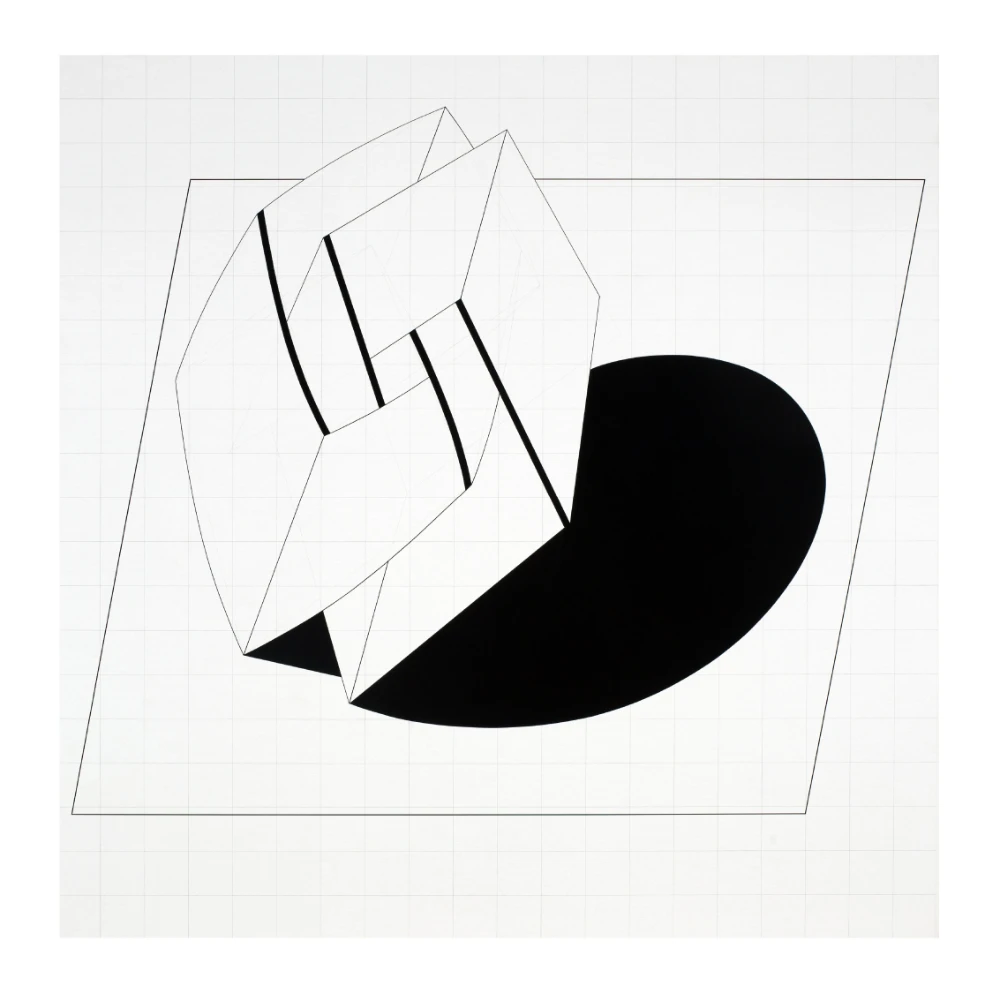
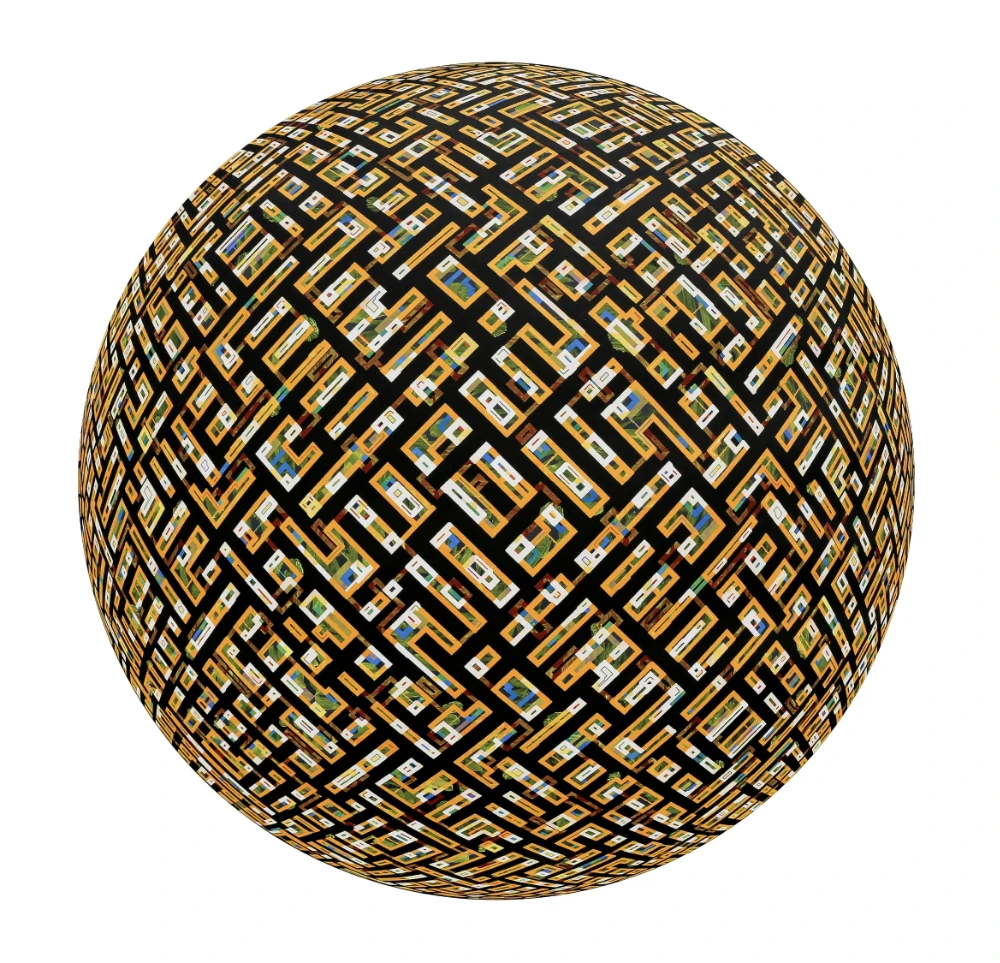
The pole of order is articulated with particular clarity in the practices of Attila KOVÁCS and Ádám SZENTPÉTERY. KOVÁCS’s works originate on the two-dimensional plane and are built through a mathematically fixed, sequential rhythm of movement. SZENTPÉTERY’s compositions, grounded in projective geometry, “bend” space back into the plane; through digital modeling, he creates monumental structures projected onto spherical surfaces. In both cases, construction, system, and formal discipline produce the image’s internal order.
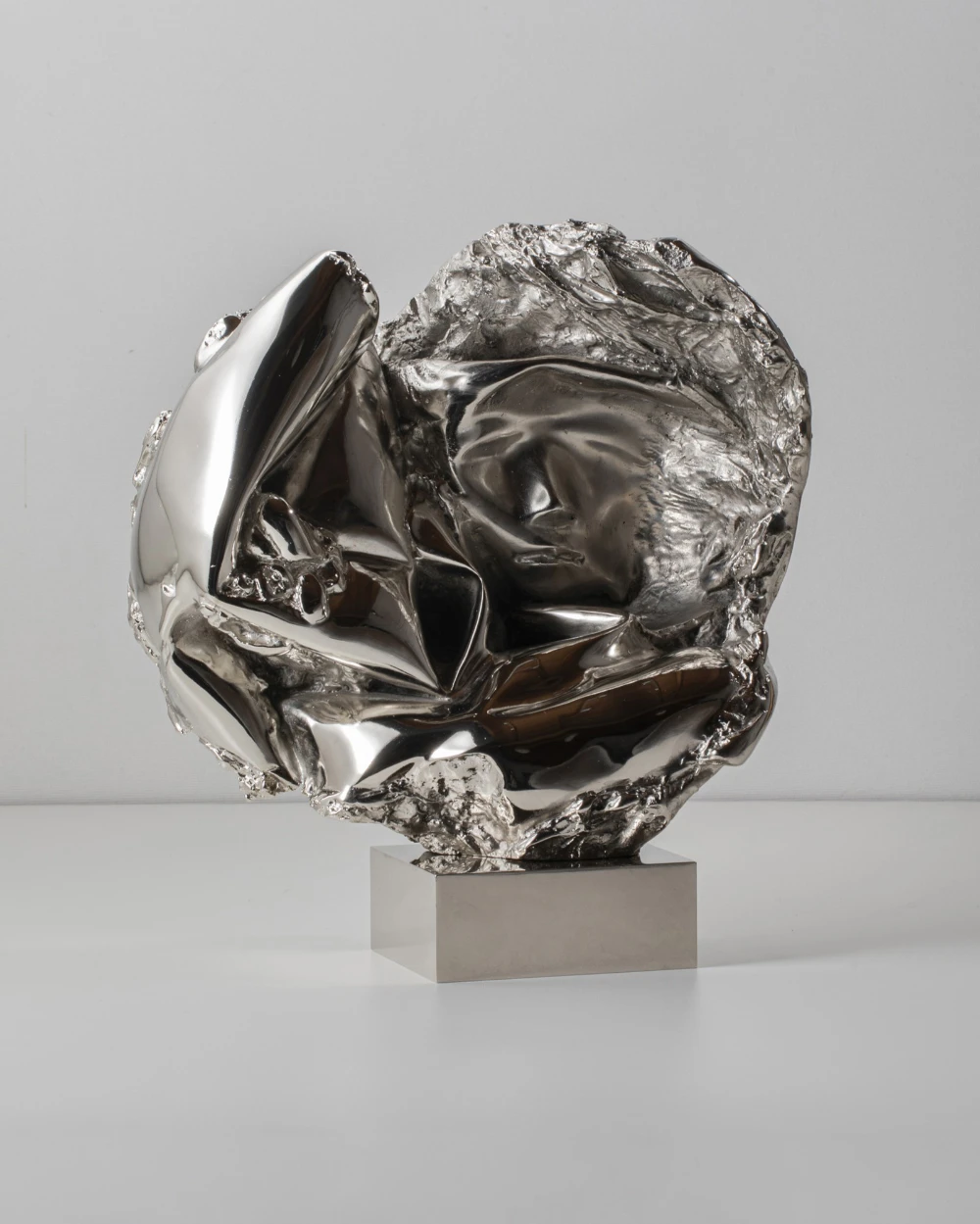
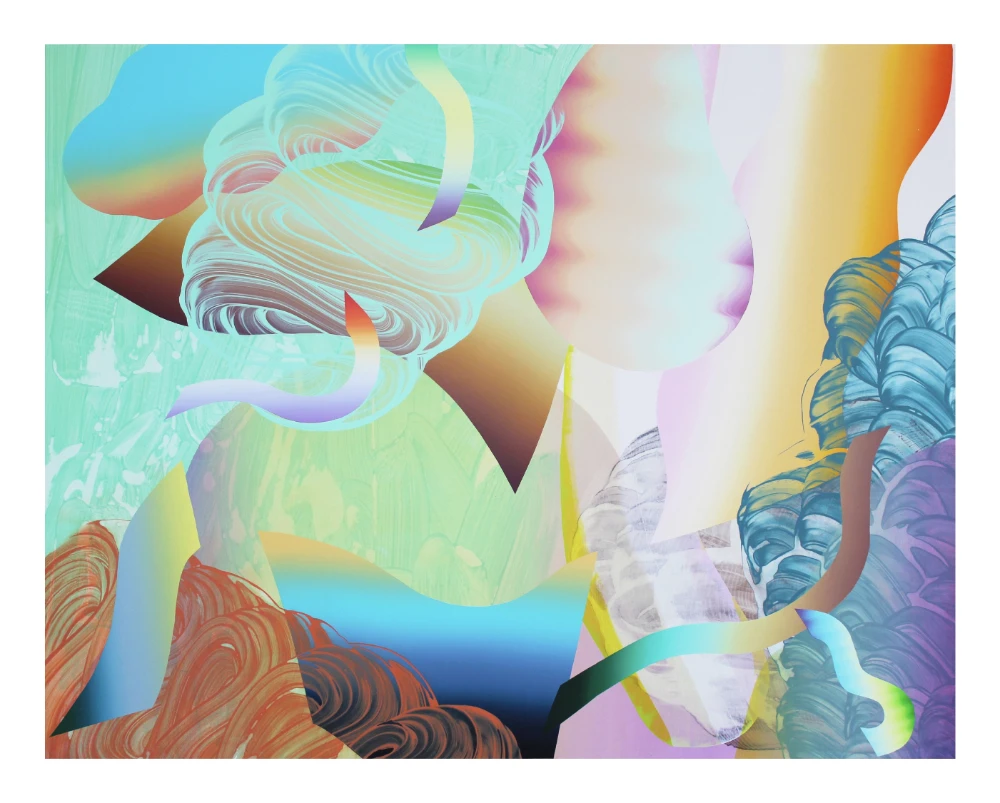
Since the second half of the twentieth century, gesture in abstraction has been understood as evidence of bodily presence: the artist’s movement is not merely an instrument but a constitutive part of the work. The energy fixed on the surface—or articulated in space—registers traces of material engagement, temporality, and decision. Gesture is therefore not mere expressivity but a condensed form of visual thinking, mediating between intellectual construction and sensory experience. Orsolya Lia VETŐ, Dávid SZENTGRÓTI, Tamás KOPASZ, and Áron BARÁTH approach this duality from different generational positions and visual languages. In their works, gesture appears at times as a restrained, meditative structure; at others as a dynamic painterly intervention; and elsewhere as a sculptural decision articulated in space. The stand installation organizes the works as a conceptual network, making visible to visitors the transitions, shifts of emphasis, and internal tensions between order and gesture.
Exhibiting Artists:
- Orsolya Lia VETŐ (*1991)
- Ádám SZENTPÉTERY (*1956)
- Dávid SZENTGRÓTI (*1980)
- Menyus SZABÓ
- Marcell MENYHÁRT (*1995)
- Attila KOVÁCS (1938-2017)
- Tamás KOPASZ (*1958)
- Áron BARÁTH (*1980)